BENGA AND FANG PEOPLE
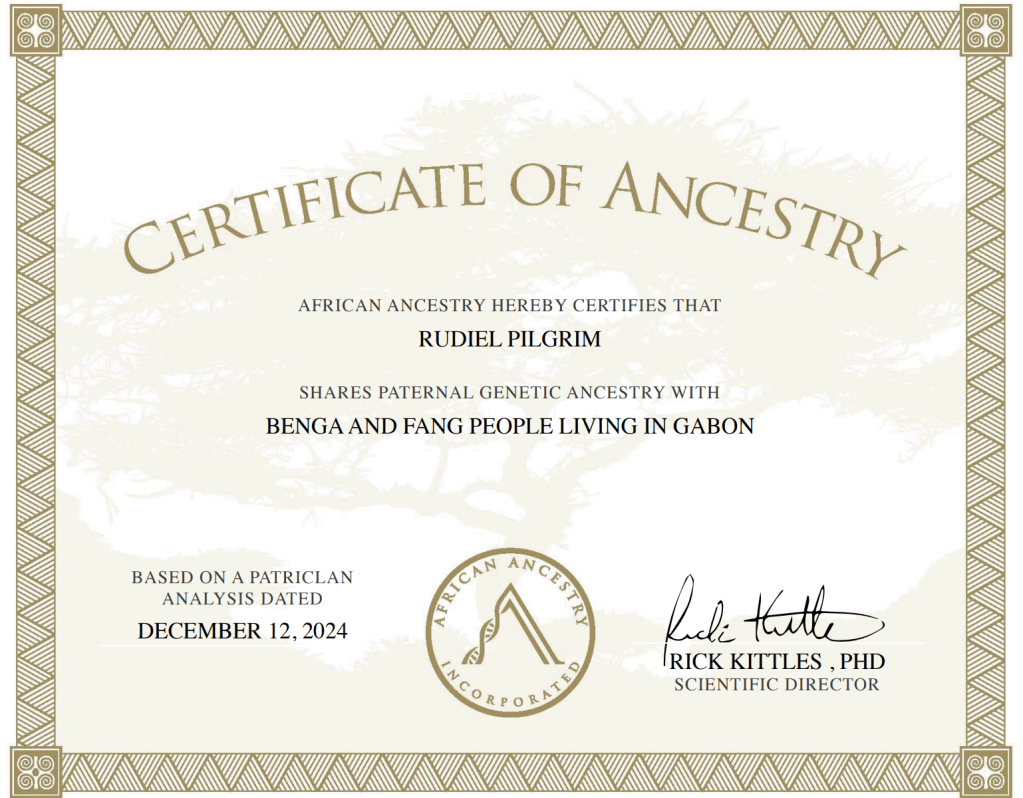
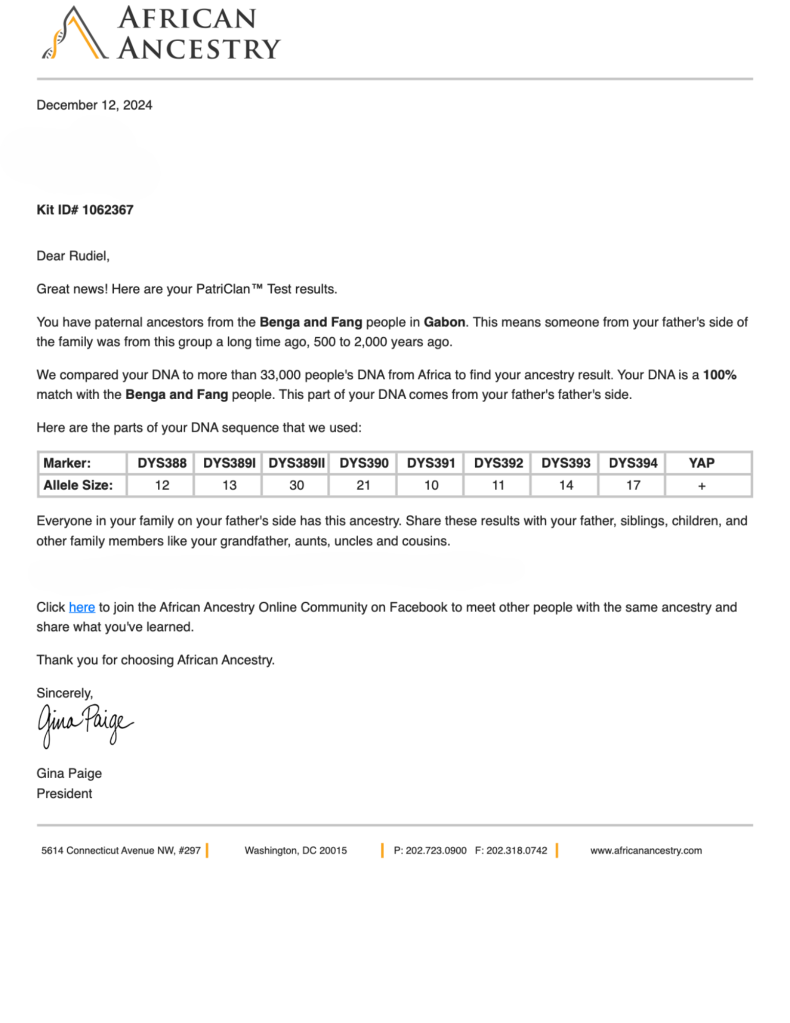
Welcome to your family’s DNA story! This page is dedicated to preserving the paternal lineage of Ulysses Pilgrim(Sappy) passed down through countless generations of your family. For both the Banga and Fang peoples, this heritage is carried through the male line, representing the DNA inherited from fathers to sons, reaching back through millennia. This certification documents your unique paternal ancestry, tracing this unbroken chain of inheritance. While daughters play a vital role in the family, this specific DNA chain follows the path of fathers and sons throughout history.
Benga
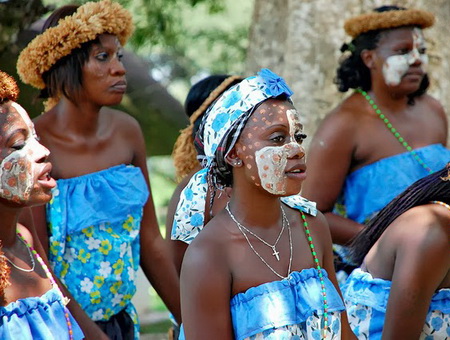
The Benga people are a small Bantu ethnic group native to the coastal regions of Equatorial Guinea and Gabon, including islands such as Corisco, Elobey Grande, and Elobey Chico. They traditionally excel as fishermen, sailors, and merchants, deeply connected to their maritime environment. The Benga speak the Benga language, which is closely related to Bubi, and are known for their peaceful and friendly nature.
Historically, they migrated from the interior to the coast for trade and played a role in the transatlantic slave trade, which was later disrupted by British anti-slavery efforts. In the 19th century, American missionaries influenced their communities, especially on Corisco Island. Today, the Benga population is relatively small, with around 8,200 individuals spread across Equatorial Guinea and Gabon. Their cultural and historical significance enriches the diverse tapestry of Central Africa.
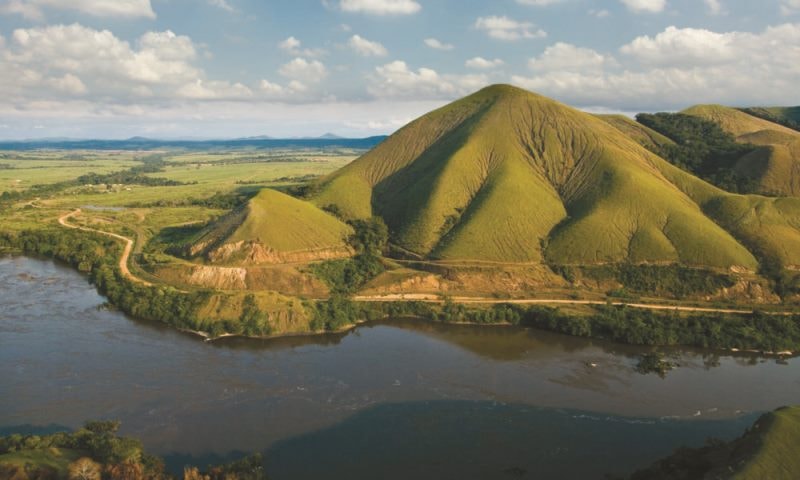


fang:
The Fang are a Bantu-speaking ethnic group primarily found in Gabon, Equatorial Guinea, Cameroon, and parts of the Republic of Congo. They are the largest ethnic group in Gabon and Equatorial Guinea. Traditionally, the Fang are known for their rich cultural heritage, including their religion, which involves ancestor worship and rituals such as Bwiti that use the psychoactive iboga plant.
Fang art is famous for its wooden sculptures, especially masks and reliquary figures, which are used in spiritual ceremonies. The people follow a patrilineal kinship system, with family ties being very important. While many Fang still live in rural areas practicing subsistence farming, a significant number have migrated to urban centers. Although they traditionally followed animistic beliefs, many Fang have incorporated Christianity into their spiritual practices.
Today, they face challenges like urbanization, the loss of traditional practices, and environmental degradation, but they remain an influential cultural group with a legacy in both traditional and modern art.
The Benga people’s migration is believed to have started when they moved from the interior of Central Africa to the coastal regions of Equatorial Guinea and Gabon. This migration was likely driven by the desire to engage in trade, as coastal areas offered access to European powers involved in the transatlantic trade. By the late 18th century, the Benga had established themselves on Corisco Island, as well as other coastal areas.
Their migration was also influenced by the transatlantic slave trade, during which the Benga, like many other African groups, were involved in capturing and trading slaves. British efforts to end the slave trade in the 19th century had a significant impact on their activities. Later, the arrival of American missionaries in the mid-1800s introduced new influences, but most missionaries departed by the 1940s, prompting the Benga to seek new opportunities elsewhere. Today, many Benga still inhabit the coastal regions of Equatorial Guinea and Gabon.
The Fang people are believed to have migrated from the northern regions of Central Africa, possibly areas near modern-day Sudan or Chad, to their current locations in Gabon, Equatorial Guinea, Cameroon, and parts of the Republic of Congo. This migration likely occurred over several centuries due to factors such as wars, climate changes, and resource pressures.
The Fang settled in the equatorial forests of Central Africa, adapting to the environment and developing their distinctive cultural practices, including ancestor worship and artistic traditions. Their migration was part of the broader Bantu expansion, where various Bantu-speaking groups moved across sub-Saharan Africa, spreading their languages, farming techniques, and social structures.
Today, the Fang are one of the most prominent ethnic groups in the region, though their migration history remains mainly oral and is characterized by a long process of settlement and adaptation in Central Africa.


 SAPPYBEULAH